Key takeaways
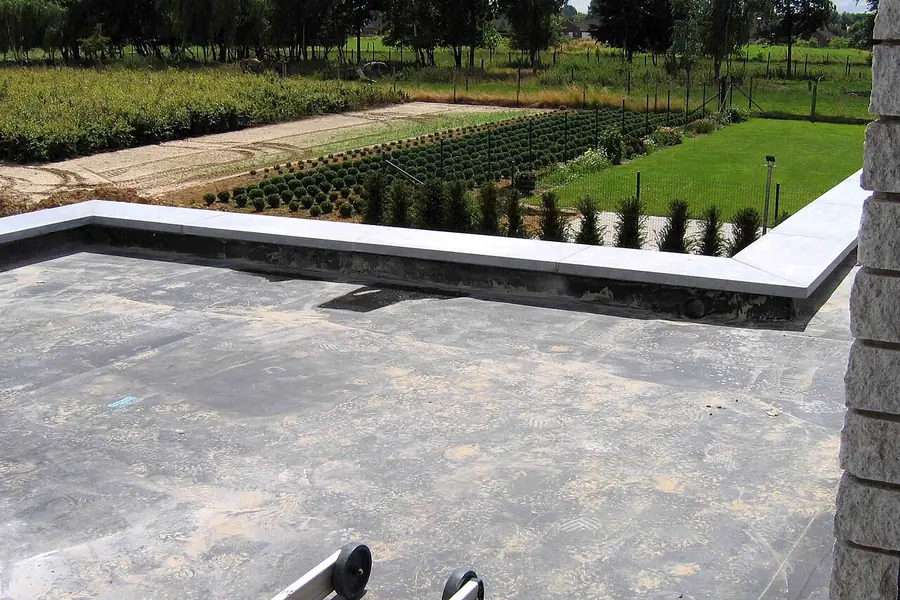
- Many rowhome roofs are low-slope, so the choice is among membrane systems and not shingles. This Old House lists installed cost at $7 to $13 per square foot across the common systems.
- This Old House says flat roofs typically last 15 to 20 years depending on material, and that EPDM usually lasts at least 20.
- In a city historic district, the preservation guidelines allow modified bitumen or single-ply membranes such as EPDM and TPO where the roof is not visible from the ground. If it is visible, ask the preservation office first.
- Drainage and flashing decide whether a flat roof leaks. Ask where the water goes and how the parapet and party walls are flashed before you ask about brands.
- A good quote names the system, the thickness or ply count, whether the old roof comes off, the flashing and drain work, and two separate warranties.
The short answer
If your Baltimore rowhome roof is flat or nearly flat, you will choose among a handful of membrane systems: modified bitumen, built-up roofing, EPDM rubber, TPO, and PVC. On published installed prices they run from about $7 to $13 per square foot. Within a roof type, quality shows up in how the parapet is flashed and where the water goes when a drain clogs. Pick the roofer first and the product second, and ask the questions at the bottom of this page.
What a rowhome roof is
The National Park Service nomination for Butchers Hill, a district of brick rowhouses in East Baltimore, says houses built before 1860 generally have low gabled roofs and those built after 1860 generally have rear-sloping shed roofs. A shed roof slopes one way, usually toward the back of the house, and that gentle pitch is why the roof is treated as flat for roofing purposes. This Old House defines a flat roof as one that slopes 10 degrees or less and has a single waterproof layer over the deck.
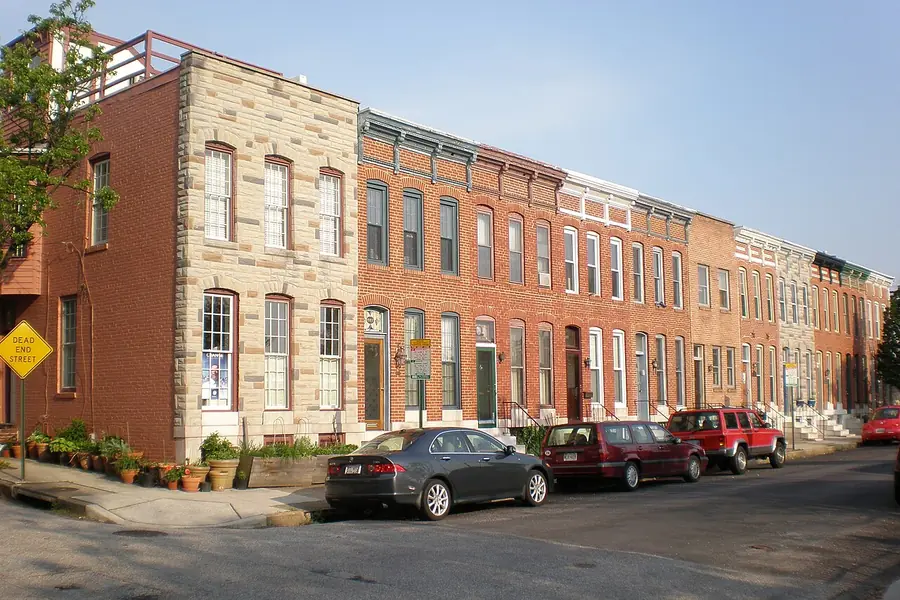

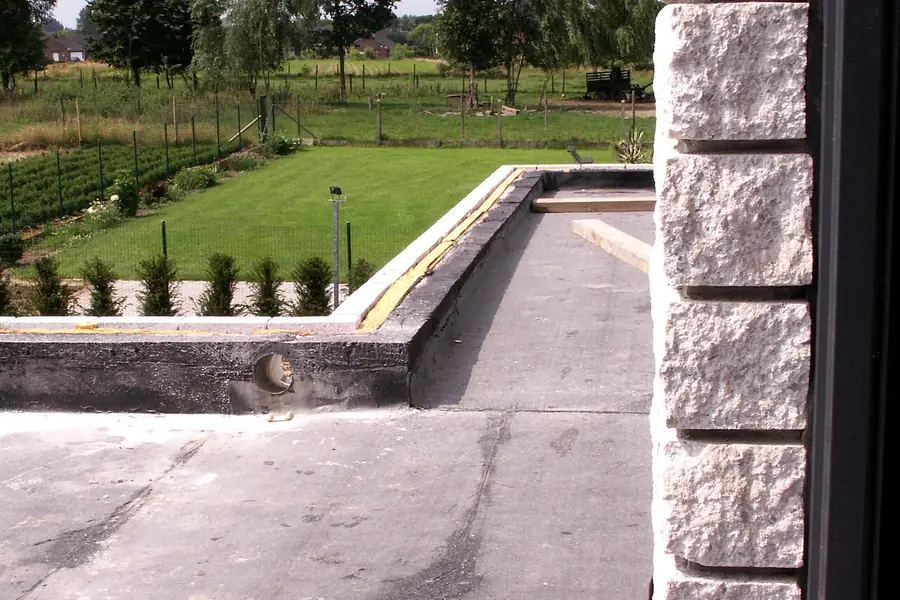
Three features matter most. The parapet or party wall, where the roof membrane turns up a masonry wall, is a seam that has to stay sealed for decades. The drain or scupper has to move water off a roof with little slope to help. The front cornice, on an older house, is often part of the historic character and may be regulated.
This Old House’s general contractor, Tom Silva, says in its flat roof guide: “If you build and flash one right, and keep it clean, a good flat roof won’t leak.”
The systems compared
| System | Installed per sq ft | What the sources say |
|---|---|---|
| Modified bitumen | $7 to $9 | Asphalt and polymers in layers. This Old House says it is popular in the Northeast because it resists cracking through freeze-thaw swings. |
| Built-up roof (gravel and tar) | $7 to $9 | Multiple layers of felt and asphalt. The extra layers seal small punctures before they become leaks. |
| Membrane (general category) | $7 to $10 | A continuous sheet. This Old House says that avoids the seam failures behind most roof leaks; the seams that remain still need care. |
| TPO (thermoplastic) | $8 to $11 | Heat-welded seams, available in white to reflect sun. This Old House calls it more complicated to install and maintain than other membrane types. |
| EPDM rubber | $9 to $13 | The oldest single-ply rubber. Usually lasts at least 20 years. Black absorbs heat; glued seams can leak. |
| PVC | not in the flat roof table; $5.25 to $13 in the rubber roof guide | Heat-welded, the most flexible and leak-resistant of the single-ply types, and the most expensive. About a 20-year life. |
Source: This Old House, Flat Roof Replacement Cost (March 2026) and Rubber Roof Installation Cost (June 2026), using Homewyse data for builder-grade materials and medium labor. National figures. The two guides price EPDM and PVC on different bases, which is why those figures differ.

Metal is also listed by This Old House as a flat roof option at $15 to $21 per square foot. It suits some low-slope roofs and is outside what most rowhome owners need to start with.
Choosing by situation
| If this is true | Lean toward | Why |
|---|---|---|
| The roof can be seen from the street, or the house is in a historic district | Ask the city’s preservation office before anything else | In a city historic district, the guidelines say roofs not visible from the ground may use modified bitumen or single-ply membranes. Visible roofs are held to matching rules. |
| You want a roof deck or will walk on the roof often | A system chosen and detailed for foot traffic | A rooftop deck is a structural addition with its own guidelines and permit review. Tell the roofer before the quote, so the system under it is chosen for the load. |
| Access is tight: narrow alley, no staging, three stories | Whatever the roofer can lay with the least handling, at an honest labor price | This Old House notes that hard-to-reach roofs and limited workspace push labor up. |
| The roof has many pipes, vents, or skylights | A system with simple, forgiving detail work | Every penetration needs waterproofing. More of them means more places for a failure. |
| The old roof has water damage in the deck | Budget for deck repair before choosing a membrane | The membrane goes on the deck, so rot in the deck has to be repaired first. |
Our summary, built from the sources cited. It is a place to start the conversation with a roofer, not a specification.
Ballpark calculator
Flat roof ballpark
Published-average ballpark$8,000
Rates are the midpoints of the ranges in This Old House's flat roof guide (Homewyse data, builder-grade materials, medium labor). A midpoint of a national range is a rough guide, and many rowhome jobs are small, which tends to raise the price per square foot. This is arithmetic on a published average, not a quote. Local labor, pitch, hidden damage, and permits can move it a lot. A pro who sees the house will give you a real number.
Where flat roofs fail
- Drainage. A flat roof has little natural water-shedding, and This Old House says drainage is a recurring headache for owners. Ask where the water leaves the roof, whether the drain or scupper is being replaced, and how the roofer will avoid standing water.
- Parapet and party-wall flashing. The point where the membrane meets masonry has to be fastened and sealed along its full length. In a historic district, the guidelines also ask contractors to protect parapets, cornices, and chimneys from damage during roof work.
- Penetrations. Plumbing vents, flues, skylights, and anything else through the roof needs its own waterproofing. A leak that shows on a ceiling is often traced to one of these and not to the field of the roof.
- Seams. Layered systems and single-ply sheets each have seams. EPDM seams are usually glued or taped, and TPO and PVC seams are heat-welded, which needs a trained crew.
- Neglect. The city’s preservation guidelines advise inspecting roofs annually and cleaning gutters, downspouts, and flashing every spring and fall at minimum, and checking that flashing is intact at parapets, chimneys, and dormers.
Tear-off or overlay
An overlay puts the new roof over the old one and costs less. This Old House cautions that it can void warranties and hide damage, and that most building codes limit a roof to two layers, so a second replacement generally means a full tear-off. If you are told an overlay is fine, ask for the roof to be checked for trapped moisture first, and ask how many layers are already there. A tear-off to the deck costs more and lets the roofer see the wood, which on an older house is worth knowing about.
What the quote should say
- The system by name. Material, manufacturer, and for membranes the thickness; for layered systems the number of plies.
- Roof area and how it was measured.
- Tear-off or overlay, and what happens if the deck is wet or rotten. Ask for a written price per sheet of deck replaced.
- Insulation and cover board, if any, with the thickness.
- Flashing. Parapets and party walls, curbs, and penetrations, each described.
- Drains, scuppers, and any edge metal or coping, replaced or reused.
- Permit and inspection, and who handles them. See our permits guide.
- Two warranties in writing: the manufacturer’s and the installer’s workmanship warranty, with their lengths.
- The contractor’s Maryland license number, printed on the contract. Maryland requires it. The deposit limit is one-third of the price. See the hiring checks.
For regional prices, permits, and licensing, see the Baltimore-area roofing guide. For general cost context, see the national roof cost guide.
Common questions
What is the best flat roof material for a Baltimore rowhome?
There is no single best one. This Old House says modified bitumen is popular in the Northeast, where freeze-thaw cycles can destroy other flat roofing materials, and that EPDM expands and contracts through weather extremes without cracking. TPO comes in white and reflects UV light. Compare how each roofer plans to handle the parapet, the drain, and the penetrations, because those details decide whether the roof leaks.
Is a rowhome roof really flat?
Usually it slopes a little. The National Park Service nomination for a Baltimore rowhouse district describes rear-sloping shed roofs on houses built after 1860. A roof with that low a pitch is roofed with a membrane system and not with shingles.
Can I put a new flat roof over the old one?
Sometimes. This Old House says most building codes limit a roof to two layers, and that laying new material over old can mask damage and void warranties. Ask the roofer to check the deck for moisture before agreeing to an overlay.
How often should a flat roof be inspected?
The sources we used do not give a single interval. The city’s preservation guidelines advise an annual inspection of roof surfaces, flashing, gutters, and downspouts, and cleaning gutters and downspouts every spring and fall at minimum.
Can I add a roof deck?
A rooftop deck is a structural addition. Baltimore City publishes rooftop deck guidelines with its construction permit requirements, and the membrane under the deck has to be chosen and detailed for foot traffic. In a local historic district, the preservation guidelines say decks easily seen from the front of the building are generally not permitted, while ones visible only from a rear street or alley may be approved. Tell the roofer before the quote.
Sources
- This Old House, Flat Roof Replacement Cost (updated March 2026, Homewyse data)
- This Old House, Rubber Roof Installation Cost (updated June 2026)
- Baltimore City Historic Preservation Design Guidelines (CHAP, updated 2022), section 1.8 Roofs
- Baltimore City DHCD, Permit Information: Construction (rooftop deck guidelines)
- National Park Service, Butchers Hill historic district nomination
- Baltimore Magazine, Anatomy of a Baltimore Rowhome (May 2025)
- Maryland Home Improvement Commission, Home Improvement Contracts