Key takeaways
- The This Old House 2026 survey found homeowners paid $517 per installed window on average. USA Today’s expert ranges run from about $300 to $1,500 per window with installation.
- Insert (pocket) replacements run $100 to $400 per window and full-frame jobs $180 to $1,500, per This Old House using Angi estimates. The cheaper job only works if the old frame is sound.
- Glass matters less than people expect: single-pane averaged $400, double-pane $529 and triple-pane $609 per window in the survey.
- In that survey 61% said the final cost matched the quote, 27% paid more, and 14% listed unexpected costs as a challenge. Ask how surprises are priced before you sign.
- In Baltimore City, ask the permit office first, and if the house is in a historic district, expect the preservation commission to approve the exterior change before a permit is issued.
The short answer
The best-documented national number is $517 per installed window, from This Old House’s 2026 survey of 1,000 people who had windows replaced. USA Today asked contractors and other experts and reports a wider band: $300 to $1,500 per window with installation, and $3,000 to $15,000 or more for ten windows. The two differ because they measure different things: one reports what homeowners say they paid, the other what experts expect jobs to cost. Neither is a quote for your house.
This guide separates the pieces that move the number: frame material, window style, glass, and whether the old frame stays. It then gives a budget table you can scale to your own window count, and a plain checklist for the Baltimore-specific questions of permits, historic districts and lead paint. For the shorter service overview, see our window replacement page.
Cost by frame and style
Frame material is one of the larger levers on the product price. In the This Old House survey the spread from the cheapest frame to the most expensive is about $110 per window, which is smaller than most people assume. The bigger swings come from style and from custom sizing.
| Frame | Average per window | What you trade |
|---|---|---|
| Aluminum | $453 | Lowest cost, lower energy efficiency |
| Vinyl | $472 | Affordable and low maintenance, fewer design and finish options |
| Composite | $513 | Durable and low maintenance, costs more than vinyl |
| Wood | $544 | Traditional look and customization, needs more upkeep |
| Fiberglass | $564 | Durable and efficient, highest cost of the five |
Survey averages of what homeowners reported paying, installed. USA Today’s expert ranges for the same materials are wider: aluminum $300 to $800, vinyl $400 to $800, fiberglass $600 to $1,500, composite $700 to $1,700 and wood $600 to $2,000.
Style adds its own premium. In the survey, single-hung windows were the most budget-friendly style at $474 and double-hung windows averaged $551. USA Today’s experts, working from different jobs, put single-hung at $270 to $700, double-hung at $400 to $1,000, casement and awning at $500 to $1,200, and bay and bow windows at $1,500 to $1,800. Custom-size or specialty windows were quoted at $600 to $1,200, with large or complex configurations at $3,000 to $5,000 or more.
Glass packages
Single-pane units averaged $400 in the survey, double-pane $529 and triple-pane $609. That puts the step from single to double at about $129 per window and the step from double to triple at about $80, by our arithmetic on the survey averages. Double-pane was the choice of 76% of homeowners, and This Old House calls vinyl frames with double-pane glass the best value option.
Energy savings are real but not large enough to carry the decision alone. Among homeowners with double-pane windows, 36% reported lower monthly energy bills after replacement, and for those who noticed savings, $25 to $49 a month was the most common range, which is about $300 to $588 a year. That is a household figure, not a per-window one. Triple-pane is more likely to earn its premium in colder homes or on noisy streets, according to the same source, and Low-E coatings and gas fills add to the price. USA Today puts typical double-pane units at $600 to $1,000 and triple-pane at $900 to $1,500 installed.
Insert or full-frame?
This choice changes the labor and the price more than any brand does. An insert (also called pocket) replacement sets a new window inside the existing frame and leaves the trim and exterior materials alone. A full-frame replacement removes the window down to the rough opening, which lets the installer see and fix rot, flashing and insulation problems that an insert hides. This Old House, using Angi estimates, puts inserts at $100 to $400 per window and full-frame jobs at $180 to $1,500.
The walk-through below turns that source’s guidance into five questions you can answer at the window with a flashlight. It is a way to prepare for the bid conversation, not a replacement for a pro looking at the opening.
Walk the opening: insert or full-frame?
- Is the frame rotted, warped or visibly damaged? Look for soft wood at the sill, paint peeling in one spot, or stains on the wall below. Yes: full-frame. The frame has to come out, and the opening needs a look. No: go to question 2.
- Has the house settled so the window is out of square, or does the frame no longer seal? Yes: full-frame. An insert depends on a square, level frame to seal. No: go to question 3.
- Do you want a different window size, shape or style? Yes: full-frame. An insert keeps the existing opening. No: go to question 4.
- Do you need to leave the exterior brick, stucco or trim untouched? Yes: an insert fits this better, since only interior trim comes off. In a Baltimore historic district, also read the section below. No: go to question 5.
- Can you accept a slightly smaller glass area? Yes: insert. The sash sits inside the old frame, so glass area drops a little. No: full-frame, which keeps the full opening.
This walk-through is based on This Old House’s full-frame versus insert guidance. If the frame is sound and you are keeping the same size and style, an insert is usually enough. Ask the installer to show you the frame condition before choosing.
What an insert cannot check
The U.S. Department of Energy’s window replacement factsheet explains why the frame question matters beyond looks. With typical replacements the existing frame stays in place to limit disruption and cost, but old windows were often never air sealed behind the trim at the rough opening and may have no pan flashing under the sill. The factsheet says homeowners have to decide whether to deal with those possible air and water leaks through a full-frame job or to keep the cost down and leave the frame alone. It adds that the choice matters most if you plan to insulate the walls later, since walls with added insulation are more vulnerable to moisture from a leaking window.
The same document sets out what each method should include. For an insert, the old stops, sashes and pulleys come out, the rough opening is cleaned and fully sealed, the exterior stops are caulked, and the new window is sealed at the existing frame. For a full-frame job, which the factsheet marks as recommended, the trim comes off far enough to expose the opening on all four sides, head, jamb and sill flashing is tied into the weather barrier, and the work follows manufacturer instructions and ASTM E2112, the standard practice for installing exterior windows. This is federal guidance, not Baltimore’s permit rules, but it is a fair yardstick to hold a bid against.
One result to avoid is paying for an insert into a frame that needed replacing. The lower upfront price can come at the expense of durability, and a warped frame may not seal the new window properly.
Budget by window count
The table below is our arithmetic, built only from the two published per-window figures above. It shows the survey average ($517) and the two ends of USA Today’s range ($300 and $1,500) multiplied out. Use it to see how wide the uncertainty is before quotes arrive, then replace it with your own numbers.
| Windows | At $517 each | Low to high |
|---|---|---|
| 4 | $2,068 | $1,200 to $6,000 |
| 8 | $4,136 | $2,400 to $12,000 |
| 10 | $5,170 | $3,000 to $15,000 |
| 12 | $6,204 | $3,600 to $18,000 |
Our arithmetic, not a quote. $300 and $1,500 are the ends of USA Today’s per-window range; $517 is the This Old House survey average. The ten-window row matches USA Today’s $3,000 to $15,000 figure by construction. Large, custom or bay windows sit outside this table and are priced one by one.
A note on a number you may see elsewhere: the same survey reports an average project of $7,183 with an average of seven windows. Seven windows at $517 is about $3,619, so those two figures do not multiply out, and the survey does not say what else the project totals include. We build budgets from the per-window figure and the count, and we ask each bidder to price removal, disposal, permits and trim as separate lines so the totals can be compared.
Buying in volume may help. USA Today says installers may charge less per window on larger projects, and This Old House says some contractors offer package pricing or lower per-window installation costs. In the survey the average project fell from about nine windows in early 2025 to seven in 2026, so it is worth asking whether doing the rest of the house now would change the per-window price.
Surprises and labor
One expert quoted by USA Today says homeowners should plan on 40% to 50% of the total going to labor, permits and installation, and that the share can climb with one-off sizes or structural changes. Removal and disposal of the old windows is easy to leave out of a quote.
The survey is candid about what goes wrong. About 61% of homeowners said the final cost was about the same as the original quote and 59% reported no challenges. But 27% paid more than quoted, 14% reported unexpected costs, 11% needed follow-up work and 9% had damage to walls or trim. Second-story windows, custom modifications, and repairs to rot or water damage are the usual reasons labor goes up. That is the practical argument for asking, in writing, what happens when the installer finds rot behind the old trim.
If a window still works, repair may be the better first move. USA Today puts repairs at $200 to $700 per window, and This Old House says repair is usually more cost-effective for isolated problems such as worn weatherstripping or damaged hardware. The city’s historic-preservation guidelines make a related point from a different angle: most heat loss occurs around a leaky frame or sash rather than through the glass, and weatherstripping or storm windows can address it. Replacement is the stronger case when damage is extensive, drafts keep returning or several problems stack up.
Baltimore: permits and historic districts
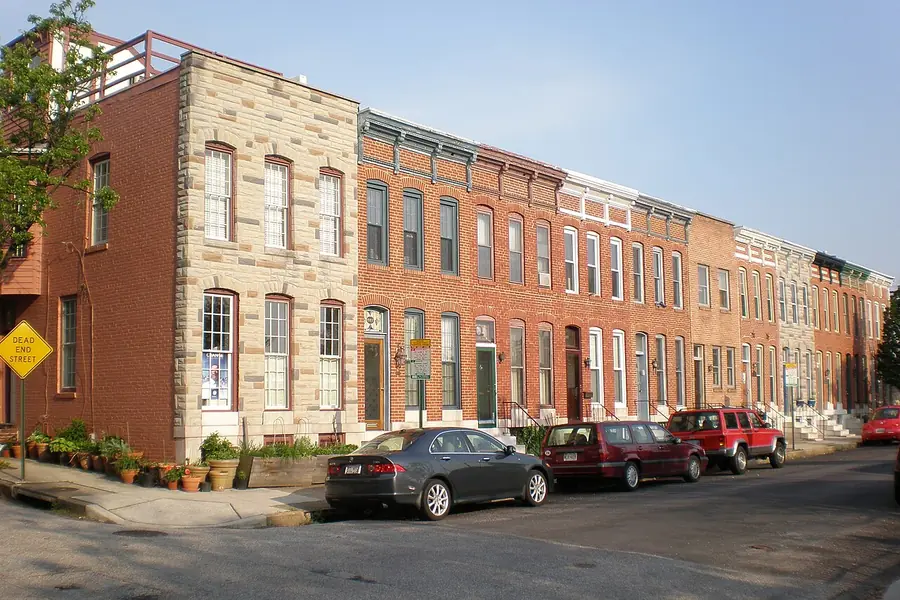
Everything above is national. This section is local and comes from the City of Baltimore’s own pages. It covers Baltimore City only: Baltimore County and other Maryland jurisdictions run their own permit offices, so call the one that serves your address.
Permits. The Department of Housing and Community Development says you need a permit when you replace or significantly alter anything on a property, that minor repairs usually do not need one unless the item is completely replaced or significantly changed, and that renovations, modifications and reconstructions always do. We also read the department’s 2026 “Work Exempt From Permit” list for one- and two-family dwellings. It names roof shingles and roof tarring, among other items, but we found no entry for windows. That is not an answer on its own. Because a full-frame job touches the opening and an insert may not, call the department with your specific plan before work starts.
Historic districts. City code requires the owner of a property in a historic district, or on the city’s landmark lists, to secure an Authorization to Proceed from the Commission for Historical and Architectural Preservation (CHAP) before any exterior alteration, and the building official may not issue a permit for a regulated alteration without it. The department’s permit page adds that applications in historic districts are referred to another agency for extra review and approval.
CHAP’s design guidelines, updated in 2022, are specific about windows. Historic windows should not be replaced unless they are deteriorated beyond repair, and when replacement is allowed, the new windows must match the historic ones in size, type, configuration, form, detail and overall appearance. Replicating the original material is always appropriate, and a different material may be considered if it replicates the size, glazing, operation, finish, profiles and arrangement. Insulated glass and clear Low-E coatings may generally be used. Snap-on muntins, removable grilles and grilles between the glass are generally not acceptable. The guidelines also recommend hiring a window contractor with experience working in historic districts, which is worth asking about during bids.

For roofs and other exterior permits in the same offices, see our guide to roof permits in Baltimore City and County, and the Baltimore roofing hub.
Hiring and lead safety
License. Maryland law says a person must have a contractor license whenever they act as a contractor in the State, with listed exceptions. Baltimore’s permit page says construction work on one- and two-family dwellings requires a Maryland Home Improvement Commission (MHIC) licensed contractor. Ask for the license number and check it with MHIC before you sign.
Contract and deposit. A Maryland home improvement contract must be in writing, legible and signed by each party, and must include the contractor’s name, address, telephone and license number, approximate start and substantial-completion dates, a description of the work and the materials to be used, and the agreed price. The owner must receive a copy signed by the contractor before work begins. MHIC says a contractor cannot accept more than one-third of the contract price as a deposit and may not accept any payment until the contract is signed.
Lead paint. If your house was built before 1978, EPA’s Renovation, Repair and Painting rule requires that anyone paid to perform work that disturbs painted surfaces in those homes be certified in lead-safe work practices, and EPA’s guide for renovators names window replacement as covered work. EPA recommends that homeowners hire a lead-safe certified contractor and publishes a search tool for finding one. The rule generally does not apply to homeowners working on their own pre-1978 home, but the lead dust is just as real.
Questions for every bid
Put the same questions to every installer so the quotes describe the same job.
- Insert or full-frame, and why? Ask them to show you the frame condition and name the reason for each window.
- The opening. For an insert, how the gap around the old frame gets sealed. For a full-frame job, whether head, jamb and sill flashing will be tied into the weather barrier.
- Exact product. Frame material, glass package (single, double or triple, Low-E, gas fill), style and the maker’s warranty terms, in writing.
- Line items. Windows, labor, removal and disposal, permit, trim and cleanup as separate numbers.
- Surprises. What rot or water damage found behind the old window costs, and who approves it before it is done.
- Permits. Who applies, whether the fee is in the price, and whether the house is in a historic district.
- Credentials. MHIC license number and, for a pre-1978 home, lead-safe certification.
- Payment. Deposit no more than one-third of the price, and the schedule after that.
If you tell us how many windows, which style and whether the house is old or in a historic district, we can introduce you to local pros who quote against the same checklist. The how it works page explains what happens next, and our siding and roof cost guides cover the other big exterior jobs if you are planning them together.
Common questions
How much does it cost to replace one window?
In the This Old House 2026 survey of 1,000 window customers, homeowners paid $517 per installed window on average. USA Today’s expert-sourced ranges run wider, from about $300 to $1,500 per window including installation. Both are national figures, and a custom or oversized window can cost far more.
Is an insert replacement cheaper than a full-frame replacement?
Usually. This Old House, using Angi estimates, puts insert (pocket) replacements at $100 to $400 per window and full-frame replacements at $180 to $1,500. Insert only works when the existing frame is sound, square and sealing, so the cheaper job is not always the right one.
What does an insert replacement leave behind?
The old frame and whatever is behind the trim. The U.S. Department of Energy’s window replacement factsheet says existing windows were often never air sealed behind the trim around the frame and may lack pan flashing, and that homeowners must choose between a full-frame replacement that addresses those spots and leaving the frame in place to hold down cost. Its checklist also says an insert job should clean and fully seal the rough opening and caulk the exterior stops.
Do I need a permit to replace windows in Baltimore City?
The city says you need a permit when you replace or significantly alter anything on a property, and that renovations and modifications always need one. The city’s exempt-work list for one- and two-family homes that we read names roof shingles and roof tarring but does not name windows. Ask the Department of Housing and Community Development before work starts, because the answer can turn on whether the opening or the exterior changes.
What changes if my Baltimore house is in a historic district?
The owner must secure an Authorization to Proceed from the Commission for Historical and Architectural Preservation before any exterior alteration, and the building official cannot issue a permit without it. The city’s design guidelines say historic windows should not be replaced unless they are deteriorated beyond repair, and that replacements must match the historic windows in size, type, configuration and overall appearance.
Can I do the work myself to save money?
This Old House says do-it-yourself installation can save on labor but that professional installation is typically the better value for most homeowners, because mistakes can cause air leaks and water damage. Professional installation may also be required to keep manufacturer warranties in force.
Sources
- This Old House, Window Replacement Cost (2026), survey of 1,000 window customers
- This Old House, Full-Frame vs. Insert Window Replacement (cost data from Angi)
- U.S. Department of Energy, Home Improvement Expert Factsheet and Checklist: Window Replacement (PNNL-SA-140052, March 2019)
- USA TODAY, How much it costs to replace your windows in 2026 (March 2026, updated May 2026)
- Baltimore City DHCD, Building Permits
- Baltimore City DHCD, Work Exempt From Permit (2026)
- Baltimore City Code, Art. 2, § 14-7 (historic districts; Authorization to Proceed from CHAP)
- Baltimore City Historic Preservation Design Guidelines (CHAP, updated 2022), §§ 1.7 to 1.7.3 on windows
- Maryland Business Regulation § 8-301 (contractor license required)
- Maryland Business Regulation § 8-501 (home improvement contract contents)
- Maryland Home Improvement Commission, Home Improvement Contracts (deposit limit)
- EPA, Lead Renovation, Repair and Painting Program
- EPA, Steps to Lead Safe Renovation, Repair and Painting (window replacement named as covered work)